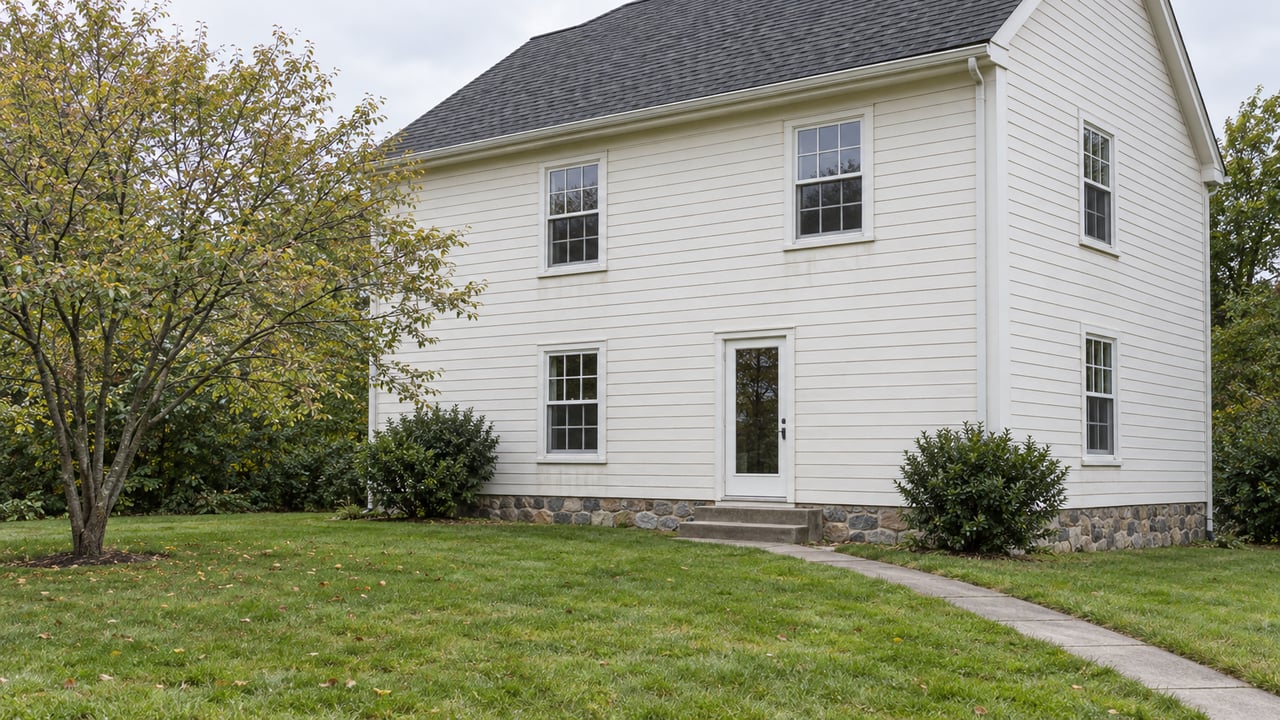
A colonial in the Sandy Hook area went under contract this spring with a line in the listing that read like an afterthought: the well pump had just been replaced, the septic tank pumped a few months before closing. To most buyers that reads as reassurance. The system works. The seller took care of it. Close with confidence.
What that line does not tell you is whether the same system has room to handle a fourth bedroom, a finished basement, or the primary suite addition you're already sketching on paper. In Newtown, those are two separate questions with two separate reviews, and the gap between them is where renovation budgets go sideways.
The rider tests for failure, not for headroom
Connecticut purchase contracts on well and septic properties typically attach a standard rider published by the state Realtors association. It makes the sale contingent on a satisfactory septic inspection performed by a licensed inspector, and it spells out who pays for what with more precision than most buyers expect going in.
| Cost | Who typically pays |
|---|---|
| The inspection itself | Buyer arranges and pays |
| Digging required to access the tank | Buyer or Seller, per contract terms |
| Pumping recommended by the inspector | Buyer or Seller, per contract terms |
| Riser retrofit, if required under the Public Health Code | Seller |
The rider also builds in a short window, commonly ten days, for the report to come back and for either side to act on what it finds. If the system fails, the buyer can walk with a deposit refund. If it passes, the file closes and the rider's job is done.
But "passing" in this context has a narrow, specific meaning. The state's own guidance on well and septic due diligence describes a flooding test, sometimes called a push test, where an inspector discharges a large volume of water into the system to simulate peak household demand and watches the leaching area for signs of overflow. That test tells you the system can handle today's household. It says nothing about tomorrow's addition, because nobody has asked it that question yet.
A dye test and a visual check of the tank are common practice, but the state guidance is candid that a system can pass those tests and still be marginal, especially one tested in dry summer months when a spring water table would tell a different story. None of this shows up as a red flag in the rider. It shows up later, when a permit application asks a different agency the harder question.
The reserve area nobody asks about at the showing
Newtown, like most Connecticut towns, requires a health code review whenever a renovation increases a home's wastewater flow. Locally this gets referred to by its code shorthand, B100a, and it applies the moment a project adds a bedroom, a bathroom, or otherwise increases occupancy. The town sanitarian, working through Newtown's health department, evaluates whether the existing septic system and its reserve area, meaning the mapped-out backup location for a future leach field, can support the new design flow before a building permit is issued.
If the paperwork and existing site records are in order, this can move quickly. If they aren't, the process escalates to test pits, percolation tests, and a design prepared by a licensed soil scientist or septic designer, all before the building department will touch the addition. On a lot with a small reserve area or difficult soils, the sanitarian may require a full system replacement or an advanced treatment upgrade just to unlock the permit for a project that has nothing to do with the septic system on its face.
This is the layer a standard home inspection and a standard septic rider don't reach. The rider asks whether the system works right now. B100a asks whether it can work under a different, larger household than the one living there today. A system can answer yes to the first question and no to the second, and the only way to know before you own the house is to ask for the septic records directly.
What failure actually costs, and who does the work
When a Newtown well or septic system is genuinely failing rather than merely near capacity, the replacement cost commonly runs $30,000 to $50,000 or more, and that figure covers the system itself, not the disruption of permitting, soil testing, and construction that comes with it. That is a meaningful number to be caught by after closing rather than before.
It's worth knowing that a home inspector in Newtown does not perform the septic portion of this diligence. Septic inspection is handled by a separate licensed contractor, and the town maintains its own list of licensed septic installers who work locally. Getting that inspection scheduled early in the ten-day contingency window, rather than waiting to see whether the general home inspection raises any flags, is the difference between having time to negotiate a repair credit and running out of contingency days with an unresolved question on the table.
A disclosure law change that lands before most fall contracts close
Connecticut's legislature made a change this year to who can see private well test results. Effective October 1, 2026, state law expands the list of people eligible to receive private residential or semipublic well testing results beyond the property owner to include certain nearby property owners as well, while also requiring the owner's approval before those results go out.
For a buyer or seller in a town where private wells are the norm rather than the exception, this matters in two directions. If you own a well, certain nearby property owners can now be among the people who receive your test results, and your approval is required before they go out. If you're buying a home near a property with well test results on file, that same pathway can give you access to information that used to stay almost entirely with the well owner. It's a small provision, but it widens the paper trail around well water quality.
What this means if a renovation is part of your plan
Newtown's market context makes the timing of this diligence sharper than it might be elsewhere. The town enters a revaluation year in 2026, and current listing data shows homes with a sale-to-list ratio running above 100 percent, with well-priced properties in good condition often going under contract within a few weeks. That doesn't leave much room for a leisurely septic conversation after the fact.
If a future addition, a finished basement with a bathroom, or an accessory space is part of why you're looking at a particular property, ask for the septic system's as-built drawings and any prior B100a approvals before you're deep into a ten-day contingency clock. A seller who has these records ready, and who can point to a documented reserve area, is handing you a much shorter path to permit than one who cannot. This applies with particular force outside the Borough historic district and in villages like Sandy Hook, Hattertown, and Dodgingtown, where municipal water and sewer are the exception rather than the rule and the septic question sits underneath nearly every renovation conversation before it starts.
None of this makes a well and septic property a harder buy. It makes it a different kind of diligence, one where the question isn't only "does this work" but "does this have room."
A few questions we hear often
Does every home in Newtown rely on well and septic? No. The Borough historic district and some newer developments are on municipal water and sewer. Outside those areas, private well and septic systems are common, particularly in Sandy Hook, Hattertown, Dodgingtown, and other outlying villages.
What exactly is a B100a review? It's the shorthand locally used for the state's public health code review that applies when a renovation increases a home's wastewater flow, such as adding a bedroom or bathroom. The town sanitarian reviews existing septic capacity and reserve area before the building department issues a permit.
Does a passing septic inspection mean I'm clear to renovate later? It means the system can handle current household use as tested. It does not evaluate whether the system or its reserve area can support an addition. That's a separate question the town's health department answers only when you apply for the permit.
What changes on October 1, 2026? State law will expand who can receive private well test results, adding certain nearby property owners to the list of eligible recipients while still requiring the well owner's approval first.
Well and septic questions are exactly the kind of detail that gets glossed over in a showing and becomes expensive three months into ownership. If you're weighing a Newtown property with a renovation in mind, or getting ready to sell one and want the paperwork in order before a buyer asks, the Kelly Higgins Team can walk through what's on file for a specific address and what it would take to get a reserve area documented before you list.
